
Pet Owner Information
Hip Dysplasia
What is Hip Dysplasia?
Hip dysplasia is laxity and incongruence of the “ball and socket” hip joint that results in joint inflammation, pain and the development of osteoarthritis. Hip dysplasia is heritable, and the development of clinical hip dysplasia relies on a combination of genetic factors and environmental factors (such as bodyweight and possible hormonal factors).
Hip dysplasia can affect all dogs; however, larger breed dogs such as German Shepherd Dogs, Labrador Retrievers, Rottweilers and Golden Retrievers are overrepresented.
Clinical Signs of Hip Dysplasia
Dogs with hip dysplasia have two distinct clinical presentations:
- Dogs less than 12 month of age with severe hip dysplasia will show clinical signs associated with abnormal movement of the femoral head (ball), which effectively “rattles” within the acetabulum (socket) due to laxity and poor congruence. This movement causes damage to the joint surfaces and causes significant inflammation, pain and progression of osteoarthritis. Common clinical signs in these dogs are unwillingness to jump, bunny-hopping gait, bilateral hind limb lameness and exercise intolerance. In severe cases, you may hear or feel a soft “clunk” at the level of your dog’s hips when they walk slowly. As the disease progresses, the joint capsule will become thicker due to arthritis and inflammation, which may serve to reduce hip laxity in the medium-term. Some of these dogs therefore show reduction or resolution of lameness as they get older, until clinical signs of arthritis progress as they age.
- Mature dogs with hip dysplasia show signs of osteoarthritis. These dogs have variable age of onset and will show hallmark signs such as stiffness after rest that they warm out of, exercise intolerance, lameness after excessive exercise and general exercise intolerance.
Diagnosis of Hip Dysplasia
A detailed history will often raise clinical suspicion of hip dysplasia. Diagnosis relies on clinical examination to document hip pain, reduced muscle mass, pelvic limb lameness or in rare instances palpable laxity in a conscious animal.
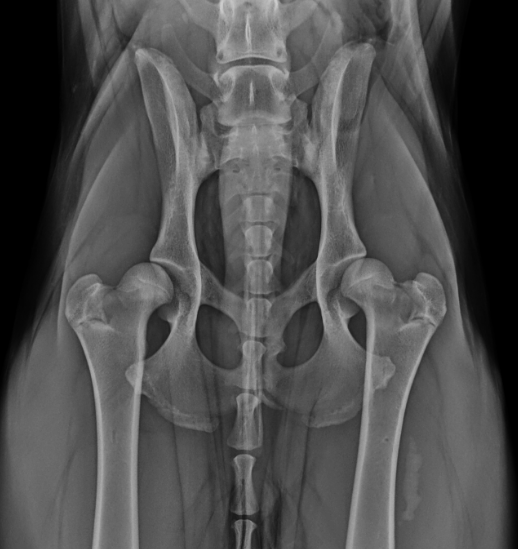
To confirm the diagnosis of hip dysplasia radiographs (x-rays) are required, which allow quantification of the degree of laxity within each hip as well as assessment for secondary osteoarthritic changes.
Detailed examination under anaesthesia is also very important, particularly in juvenile dogs as the presence of palpable laxity in dogs from 16 weeks of age is consistent with hip dysplasia and can be used to guide treatment recommendations.
Treatment of Hip Dysplasia
Treatment of hip dysplasia depends on the age of diagnosis and the severity of clinical signs. Surgical management of hip dysplasia is broadly divided into palliative intent surgery and salvage surgery.
Palliative Surgery
The aim of palliative surgery is to manage clinically significant hip laxity in a juvenile dog, before the onset of osteoarthritis to prevent progression of clinically significant disease. The most widely available palliative surgery for hip dysplasia is Juvenile Pubic Symphysiodesis (JPS). This is a time-sensitive procedure as it relies on ongoing growth potential to alter hip anatomy. The procedure is best performed between 16-20 weeks of age and may be considered up to 22 weeks of age in some cases.
Early diagnosis based on clinical suspicion and confirmed via palpation under anaesthesia is therefore imperative. Juvenile Pubic Symphysiodesis is a low-morbidity procedure (less invasive than standard sterilisation procedures) and is effective for the management of mild to moderate hip laxity to reduce progression of osteoarthritis.
Salvage Surgery
In dogs older than 20 weeks of age, where JPS is less likely to be effective, salvage surgery may be indicated if their clinical signs are severe enough. The best salvage procedure available for canine hip dysplasia is total hip replacement. Total hip replacement can resolve lameness and pain associated with hip dysplasia and result in excellent quality of life.
Conservative Management
Many cases of mild to moderate canine hip dysplasia can be managed conservatively very effectively. Conservative management of canine hip dysplasia relies on management of secondary osteoarthritis. The core tenants of osteoarthritis management in dogs are;
- Weight control (maintaining a lean body condition score life-long)
- Exercise moderation (regular moderate lead exercise, rather than intermittent sprint work) and
- Medical treatment (non-steroidal anti-inflammatories are the cornerstone of this management).
For further details of osteoarthritis management, please refer to our information sheet here: bunburyvets.com.au/osteoarthritis/