Call Bunbury Vet Clinic
(08) 9721 5999
Call Eaton Vet Clinic
(08) 9725 0399
Brachycephalic Obstructive Airway Syndrome
(BOAS)
Bunbury & Eaton Vets
Brachycephalic Obstructive Airway Syndrome (BOAS)
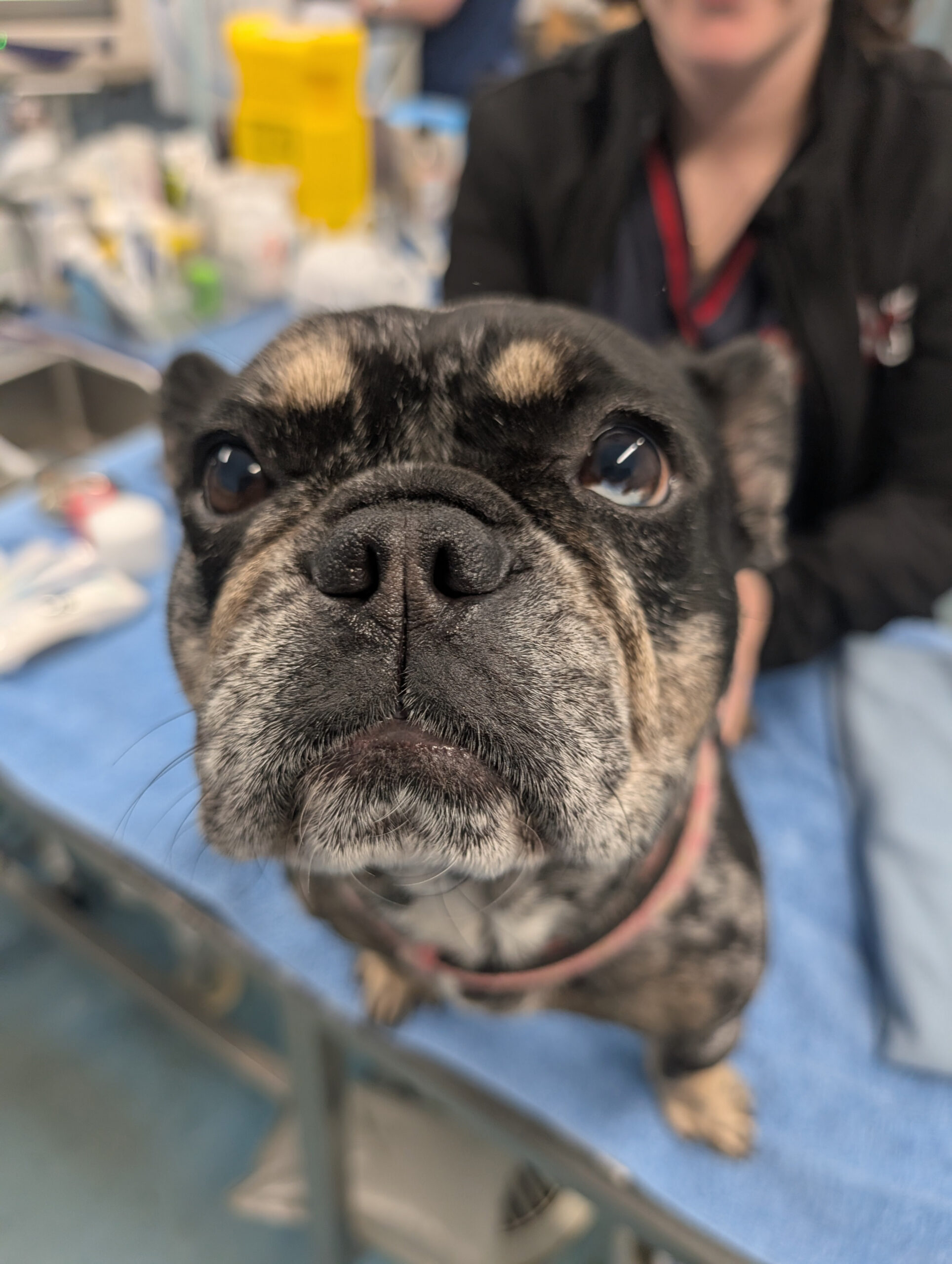
Working with French Bulldogs, Pugs, and other brachycephalic breeds is an absolute joy. They are such wonderful characters, and brighten any day with their cheeky personality and love of life.
Something I am passionate about is helping these dogs live their best life, which often means improving their airway so they can breathe, sleep, and eat better.
There are 5 aspects of brachycephalic airway disease we look to address. These are:
- Soft palate length
- Soft Palate thickness
- Tonsils which are normally enlarged
- Laryngeal saccules
- Narrow nostrils
When we address all 5 aspects of this condition we often refer to it as 5/5 surgery.
The first thing I look at is something called the 25/30 test. Basically, exercise the dog for 30 minutes at around 25 degrees (it can be done on cooler days, but please don’t do this on warmer days). Then compare their recovery time to that of a normal dog (like a Labrador or Collie). If their recovery is similar to a normal dog, this test should be repeated every 6 months to see if there are any changes. Brachycephalic airway disease is a progressive condition, so it normally gets worse with age. I recommend starting this test at 10-12 months of age as early intervention gives much better results.
Dogs which are very gassy, vomit or regurgitate frequently, sleep with toys in their mouth or with their head held up are also very likely to benefit from surgery.
Now is a good time of year to be checking your brachy dog for signs of airway disease. Summer can be especially dangerous for these dogs as they can overheat quickly due to inefficient panting, so managing their airway before the heat of summer dramatically decreases the risk.
If you haven’t done so before, please do the 25/30 test on your dog (a more detailed explanation is below), and follow for details on how we go about improving their airway for a better life.
The 25/30 Test
A good test that any owner of a brachycephalic dog can do is called the 25/30 test. This can be done at home/at the park, with the results then relayed to your vet.
The test is performed as follows.
- On a 25-degree day, running your dog around down the park off lead for up to 30 minutes.
- Compare their breathing to a same aged normal-nose dog, such as a Labrador. (Not another brachycephalic that may be worse than yours, giving a false sense that they have “no breathing concerns”) Compare your dog with respect to the following:
a. Do they puff and pant more quickly and with more effort than the normal-nose dog with the same degree of exercise?
b. And far more importantly do they take longer to recover to a closed-mouth breathing pattern after the same degree of exercise?
Are there any differences: YES / NO
If the answer is yes, are those differences MILD, MODERATE or SIGNIFICANT?
If there is a difference, your dog will likely benefit from BOAS surgery and we recommend contacting your vet to organise this. If there is no difference, under conditions as close as possible to the above, monitor them for year-on-year “progression” of these differences compared to normal-nose dogs.
This “progression” and “degree of differences” is the most accurate way to understand their real breathing restrictions, and impact of BOAS. It is much more sensitive than an examination in the consult room.
Unfortunately, it has been found that in excess of 90% of owners notice differences that are at least moderate by 18 months, with many even younger than this. The only reason they show differences (mild, moderate or significant) is due to severe airway restrictions.
These dogs will almost always benefit from 5/5 airway-improvement surgery. They don’t always “need” surgery (they can often survive without it), but they do benefit from surgery. We feel the safest time to do it, with the best long-term results, are between 8-14 months, with around 12 months of age being ideal.
The following will help you ascertain if differences are mild, moderate or severe:
If your dog can actually complete 30 minutes exercise (running, chasing, zooming etc. Not just walking) in 25 degrees celcius but shows no increased panting compared to a normal-nose dog, and is exhibiting closed-mouth relaxed breathing in 2-4 minutes after the 30 minutes, then there is no difference. In this case no benefits will be had from surgery. Just monitor and repeat the test each year.
However, if there is some increased panting during this exercise period, and it takes say 5-10 minutes to return to normal breathing, that’s mild differences. 10-20 minutes to recover shows moderate differences, and over 20 minutes to recover is the definition of significant differences
If you wouldn’t possibly allow 30 minutes exercise in 25 degrees as you know they will struggle, or you have tried but they can’t safely complete 30 minutes, then that’s also severe differences. (Please note: do NOT attempt this test if you are concerned your dog cannot complete it safely. In this case, please contact your vet to organise BOAS assessment).
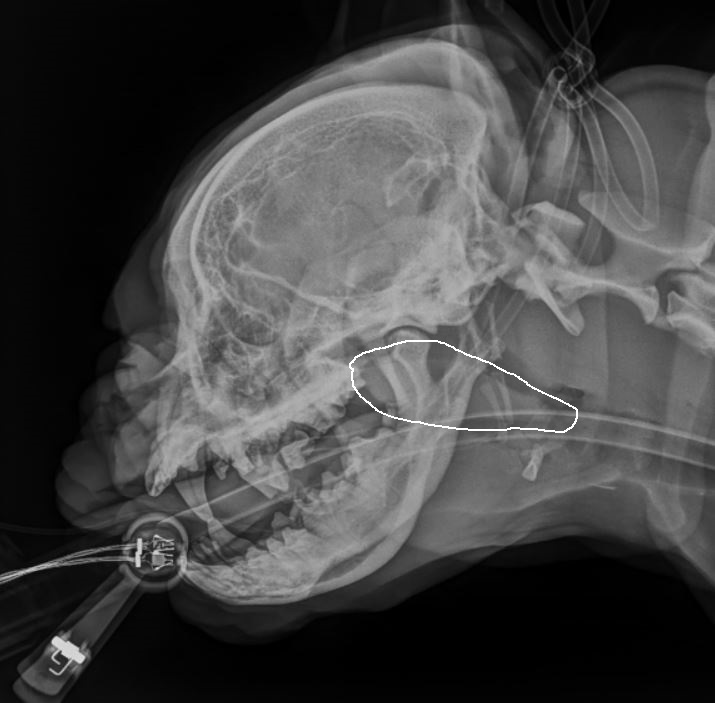
Brachycephalic Airway part 2.
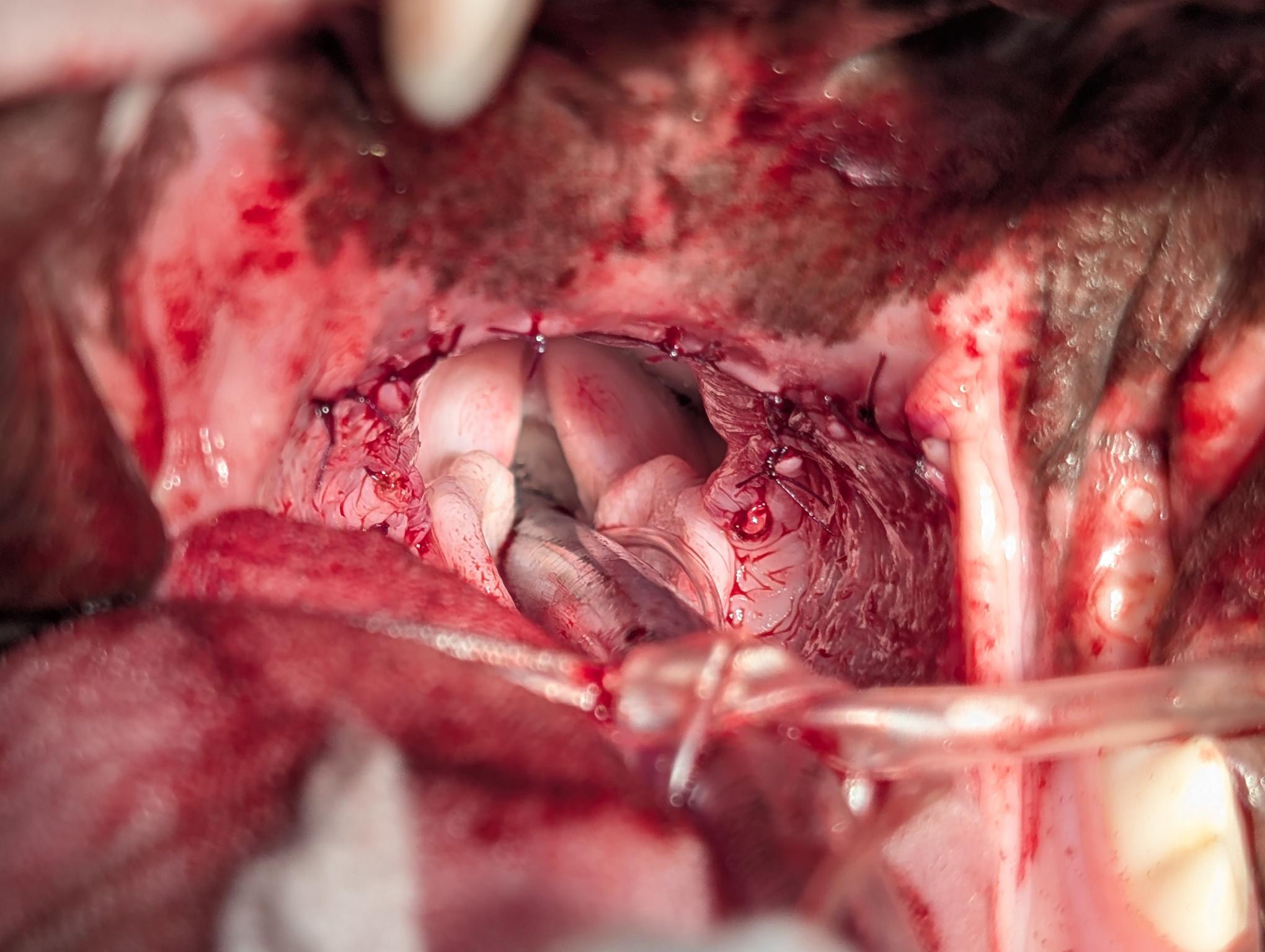
Normally, the biggest contributor to Brachycephalic Obstructive Airway Syndrome (BOAS) is the soft palate. If we go back a few years, we used to just shorten the soft palate using a “cut and sew palatoplasty”. This would certainly improve the airway, but it missed a big part of the problem – the thickness of the remaining soft palate.
I have circled the soft palate in the xray. It shows the soft palate is too long, extending down into the larynx. This means that every time the dog breathes in the soft palate gets sucked into the larynx, making it hard to breathe. It also shows the soft palate is very thick – it’s more than twice the thickness it should be.
Soft palate thickness is so important because it obstructs the dog’s airway when they breathe through their nose. Dogs are obligate nasal breathers, meaning they can’t breathe through their mouth at rest. If the soft palate is too thick, it blocks the passageway above, making nose breathing very hard. When you see pictures of brachycephalic dogs sleeping with toys in their mouth or with their upper teeth hooked on a cage while they rest, this isn’t them being cute – it’s what they need to do to allow themselves to breathe while they sleep.
When choosing a vet to perform BOAS surgery, make sure they can thin and shorten the soft palate, as we want the dog to have the best airway possible.
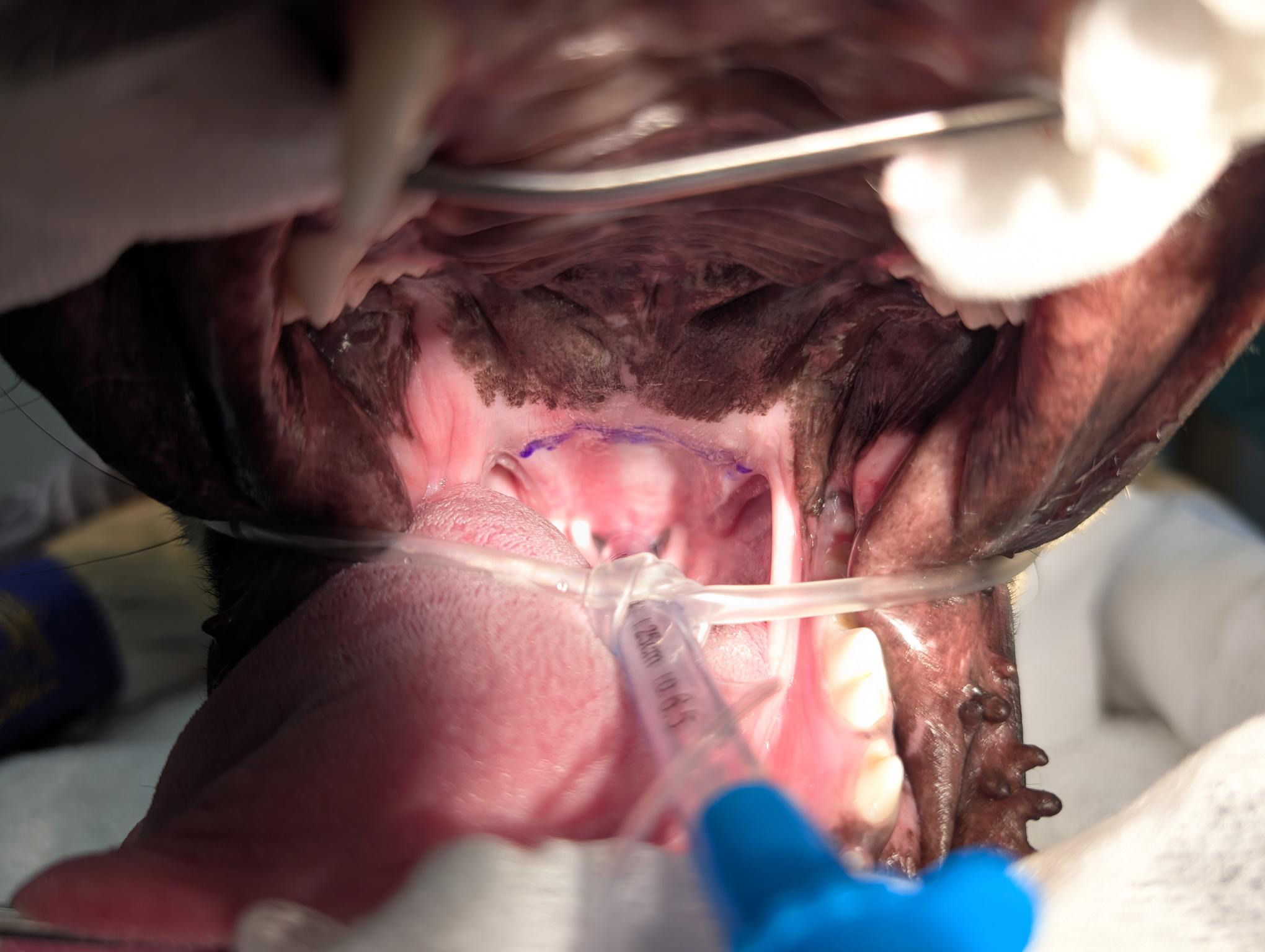
Brachycephalic Airway Part 3.
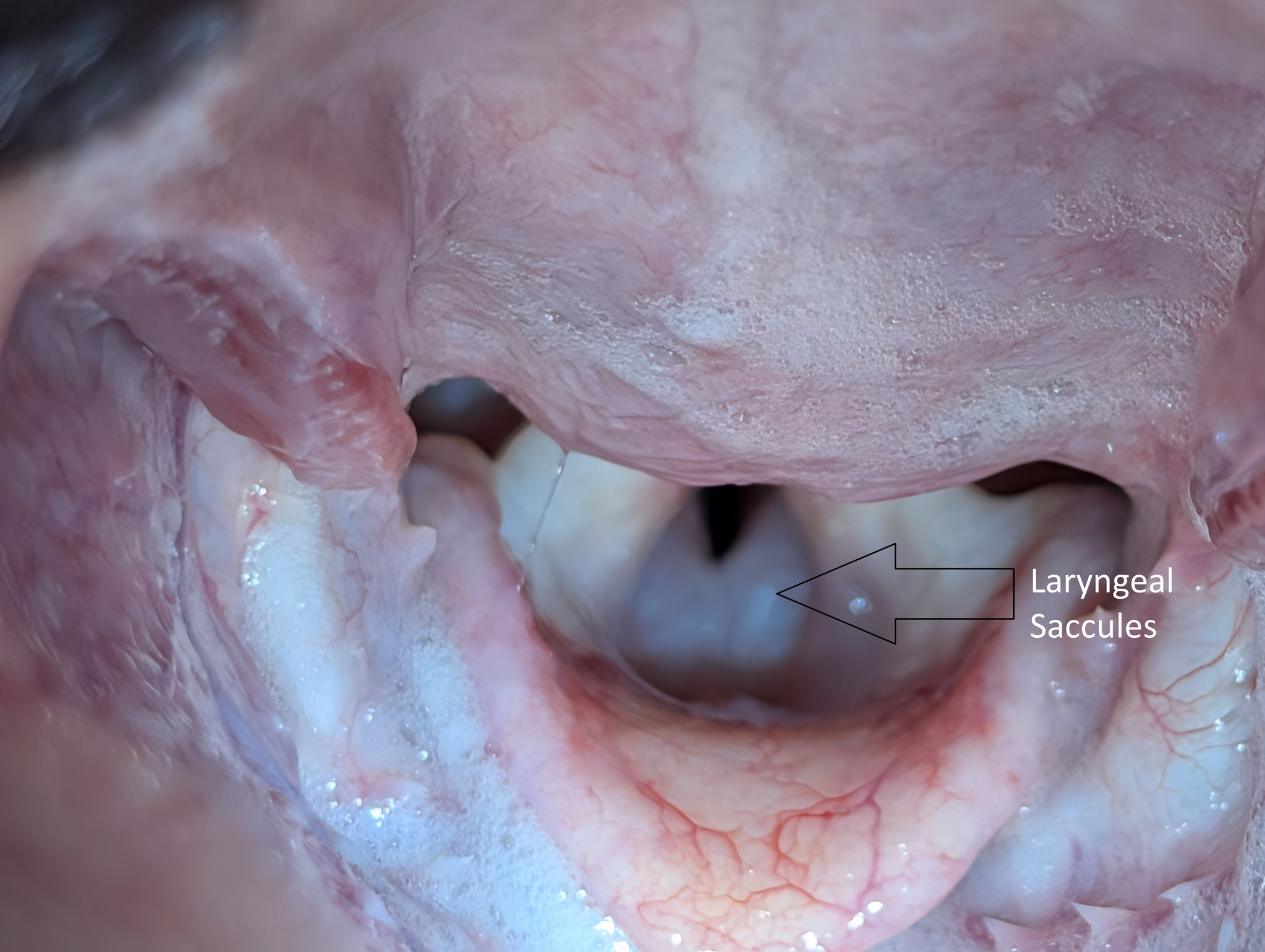
This shows why we need to remove the laryngeal saccules in these patients. The white masses visible within the larynx are the laryngeal saccules, which have become everted from their normal position. These should be tucked away inside the larynx and not visible. You can see here how much they are narrowing the airway – more than half of the airway is blocked. This is what we see with Grade 1 Laryngeal Collapse, and often see this as early as 6 months of age.
We will remove these saccules as a part of every Brachycephalic Obstructive Airway Surgery, helping keep the larynx open and functioning normally.
Brachycephalic Airway Part 4.
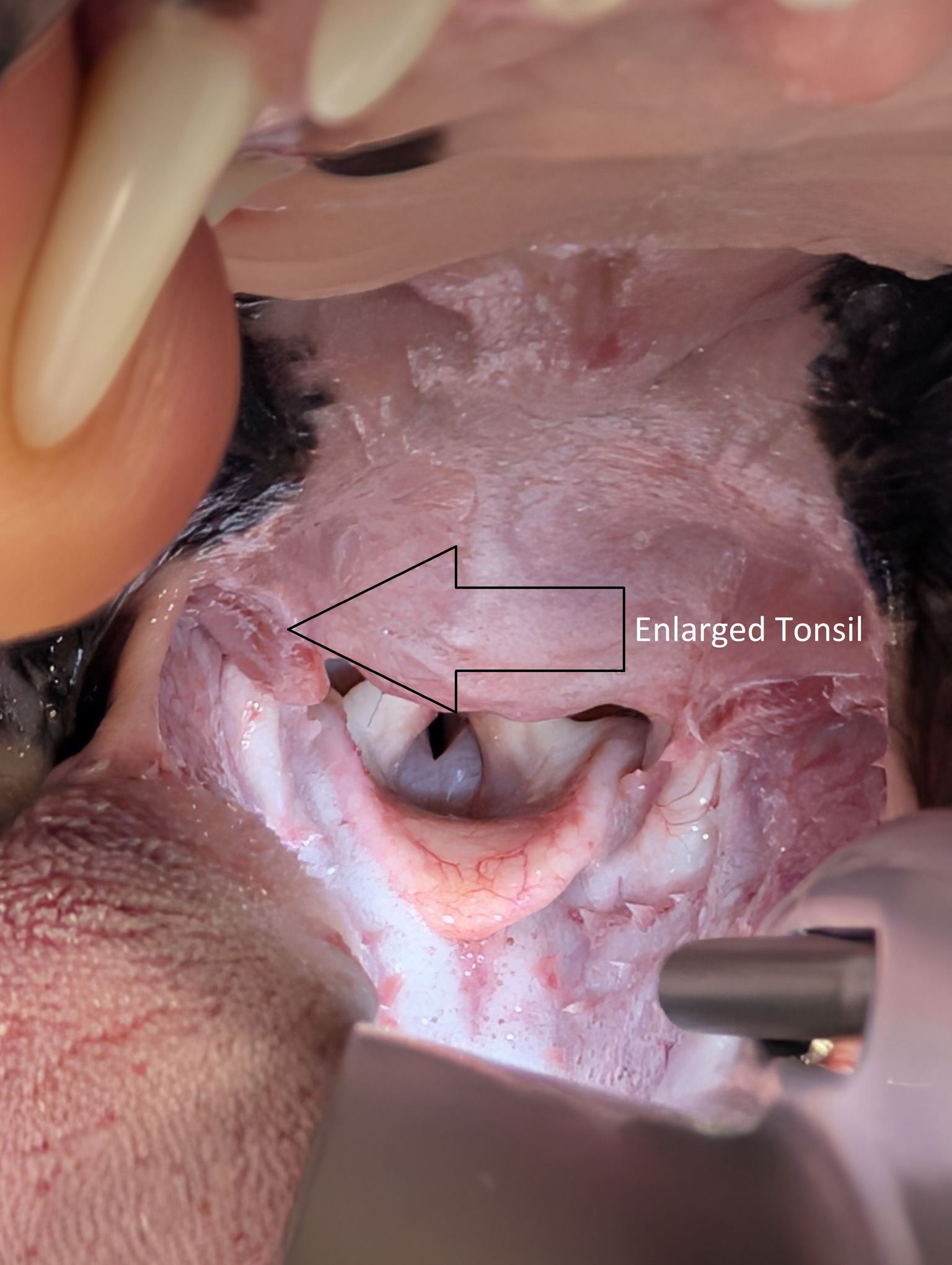
In almost every Brachycephalic dog, we find the tonsils are enlarged and inflamed. This can be caused by a combination of irritation during breathing and reflux.
When these tonsils are enlarged, they contribute to airway narrowing. By removing the tonsils as part of the Brachycephalic Obstructive Airway surgery, we create even more space for air to flow.
Brachycephalic Airway Part 5.
This video shows my approach to improving the nose. I perform a procedure called an ala-vestibuloplasty, which gives approximately 70% better airflow than older techniques. It takes about 2 weeks for the nose to heal from this procedure, but it tends to give a good cosmetic result as well as significant improvements in breathing.
Brachycephalic Airway Part 6.
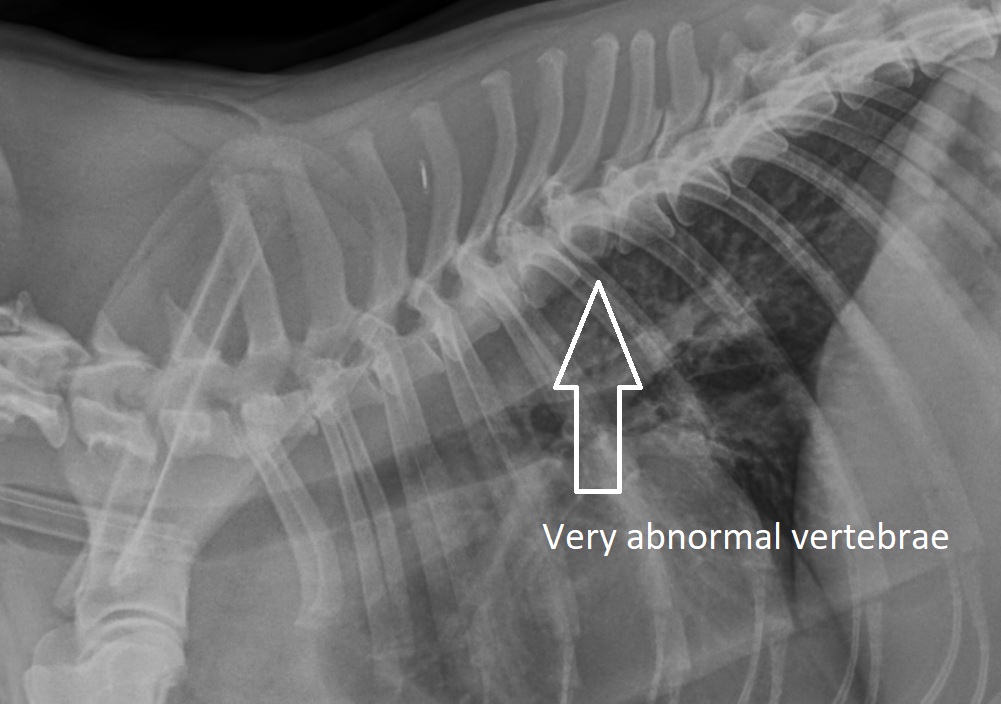
As part of Brachycephalic Obstructive Airway Surgery (BOAS), I will take an xray of the chest. I do this to check for evidence of aspiration pneumonia, as well as checking the size of the trachea (wind pipe). Breeds such as British Bulldogs are very prone to a narrow trachea, which can affect the outcomes of surgery.
It also gives me a chance to assess the spine. Many of these breeds have severe spine deformities (it is linked to the gene that causes the short tail). This gives us information which may be useful if the dog later develops spinal issues, as we already know what the spine looks like. In this xray almost all the vertebrae are abnormal.
We find that the results of surgery are much better with early intervention. The ideal time to consider airway correction for Brachycephalic dogs is around 10-14 months of age. We find the surgery not as beneficial in older dogs, but the improvements can be significant, as well as slowing the progress of the condition.
If you feel your dog may benefit from BOAS surgery, please contact the Eaton Vet Clinic and ask for an assessment with Dr Braden Collins, or book online for a “Consult-BOAS Discussion” HERE. From there Dr Braden will assess your dog, discuss the benefits and risks of surgery, and work to give your dog the best life it could possibly live.